Community Energy Futures: Using IxD to Study Social Dynamics in Microgrids
Class: UT330, Interaction Design & Urban Experiences
Instructor: Matthew Wizinsky
Group Members: Elijah Stowell, Pranav Boopalam
Skills: UX Research, Interaction Design, Speculative Design, Service Design
Tools: Figma, Qualtrics
TLDR
How do choices in interaction design affect the social outcomes of neighbors sharing power in microgrids?
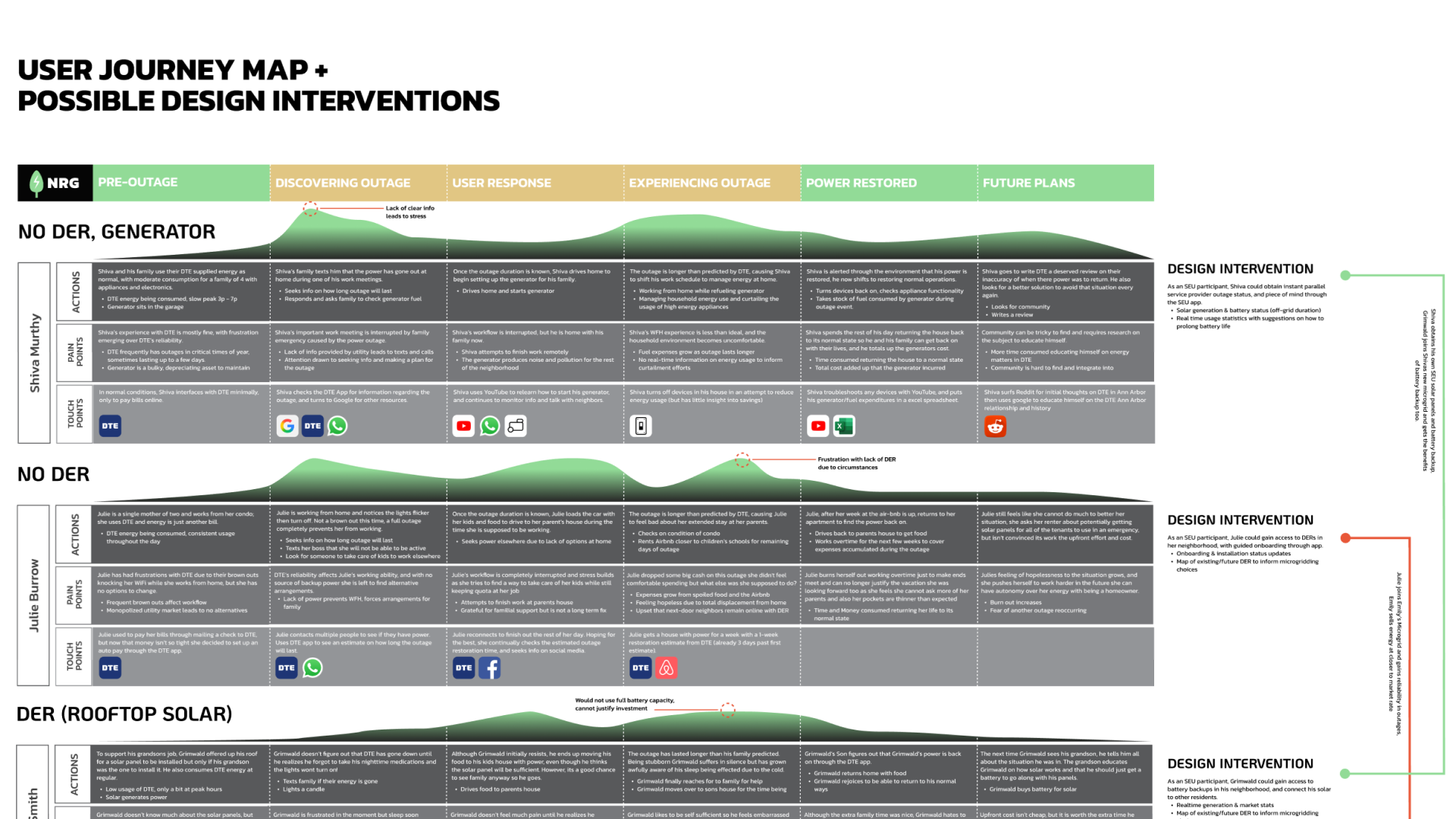
In this research project, I designed multiple interaction design prototypes representing different ways residents could share energy with eachother in a microgrid. I conducted UX Research through multiple generative and exploratory methods; and developed personas and a user journey map with the collected info. Through iterative user testing, I documented how each change affected behavior and overall social outcomes. Through comprehension testing, I recorded how users percieved different design choices.
Final Outputs
Setting the Stage: Ann Arbor's Sustainable Energy Utility
The transition to sustainable energy is one of the paradigmatic challenges of the 21st century, unfolding at many scales through social, technical, legal, and economic changes. In 2024, residents of Ann Arbor, MI (USA), voted to create a community-owned Sustainable Energy Utility (SEU), an opt-in energy utility providing 100% renewable energy from local solar and battery storage systems at participating homes and businesses. These efforts indicate new possibilities for community investment and energy management. However, the transition from a corporate utility to networked "microgrids" is not without friction.
Shifting from a corporate utility to networked "microgrids" brings opportunities but also new social friction. How will neighbors and local businesses work together to form new coalitions for energy production and sharing? Who will decide what counts as "surplus" energy and what should be done with it? During outages, how will microgrid participants choose whether to sell, share, or trade energy?
.png)
.png)
Research Methods
Despite microgrids, virtual power plants (VPPs) and other forms of demand-side energy aggregation showing promise to reduce demand on the electric grid and improve reliability for energy users, little research has been done to study the social dynamics of microgrids, or the socio-technical intersection required to support a localized, sharing energy economy among a group of neighbors.
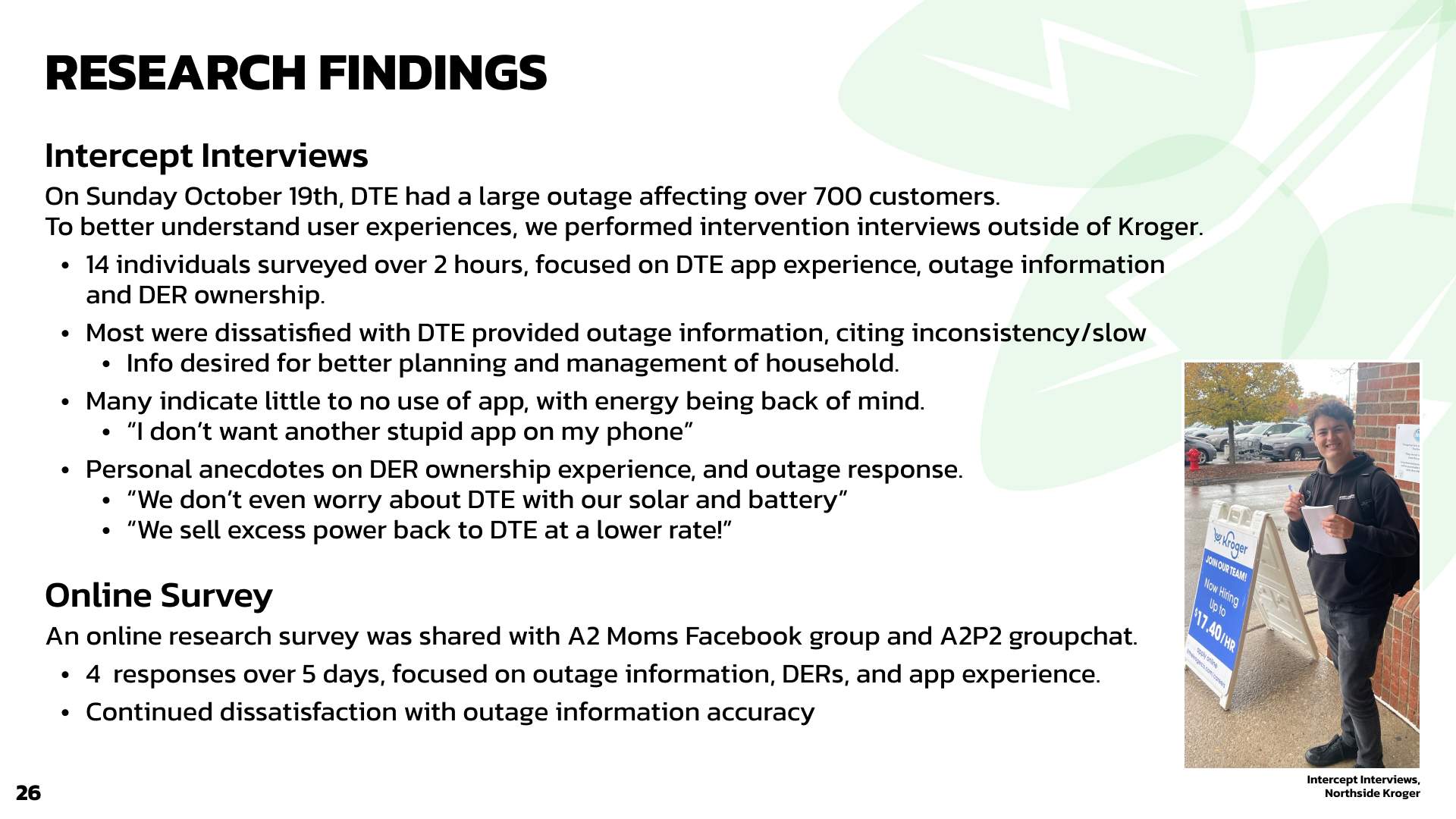
With such a wide problem space, we conducted multiple rounds of exploratory and generative research with real residents of Ann Arbor Michigan to understand their needs and desires for local energy solutions. In addition to desk research on local energy policies and VPP initiatives, this engagement helped us position ourselves to create a meaningful solution and uncover new research questions.
With the results of this research in mind, our project takes a speculative position to the question of neighborhood level energy aggregation, and asks the question "How might we design a community focused, digital interface to facilitate the use/management of distributed energy resources (DER)?"
Exploratory Research
- Intercept Interviews
- Online Survey
- Semi-Structured Verbal Interviews
Generative Research
- Persona Creation
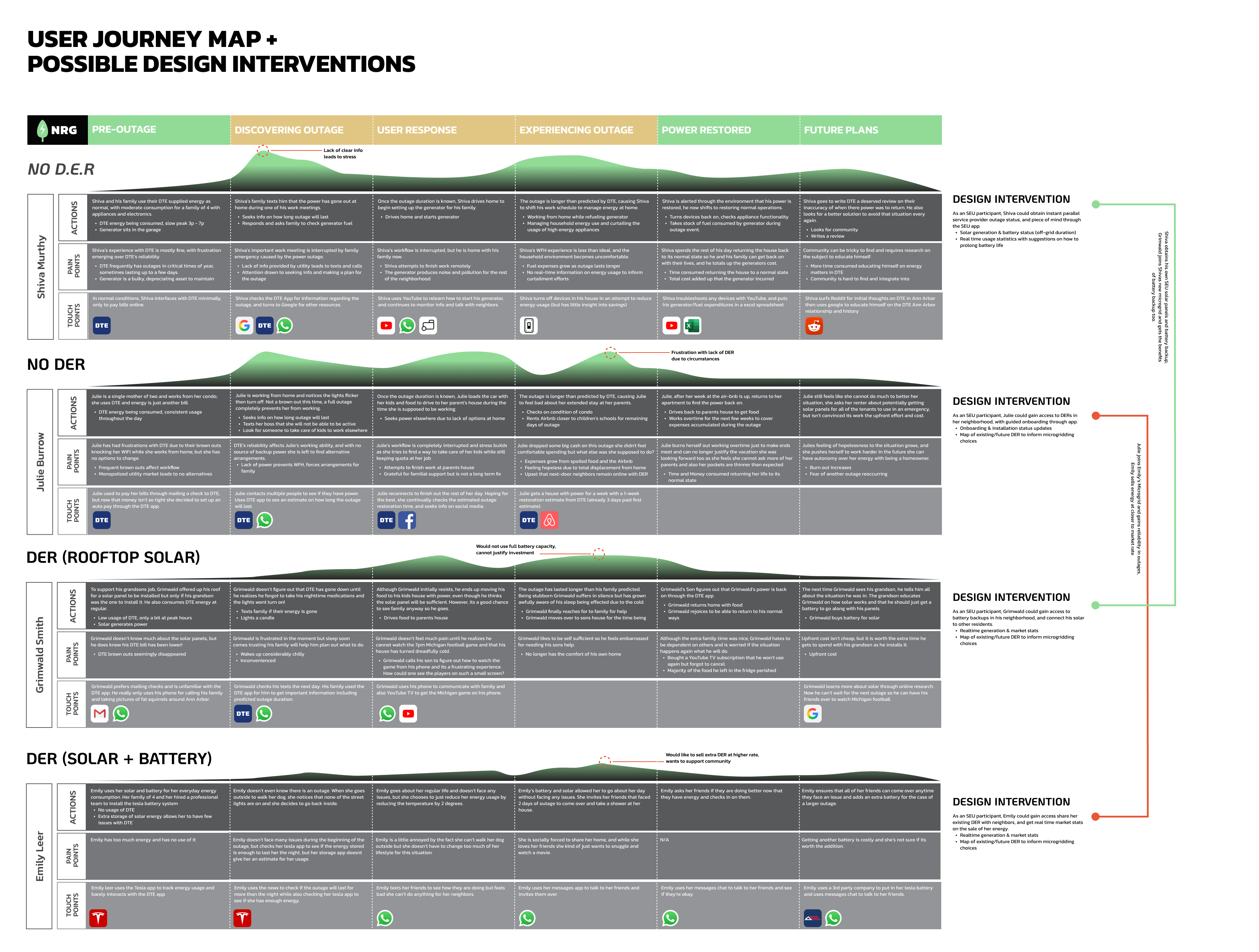
- User Journey Maps
- Storyboards
- Design Prototypes
Evaluative Research
- Comprehension Testing
- A/B Testing
- User Desirability Testing
- Design Prototypes
Design Interventions
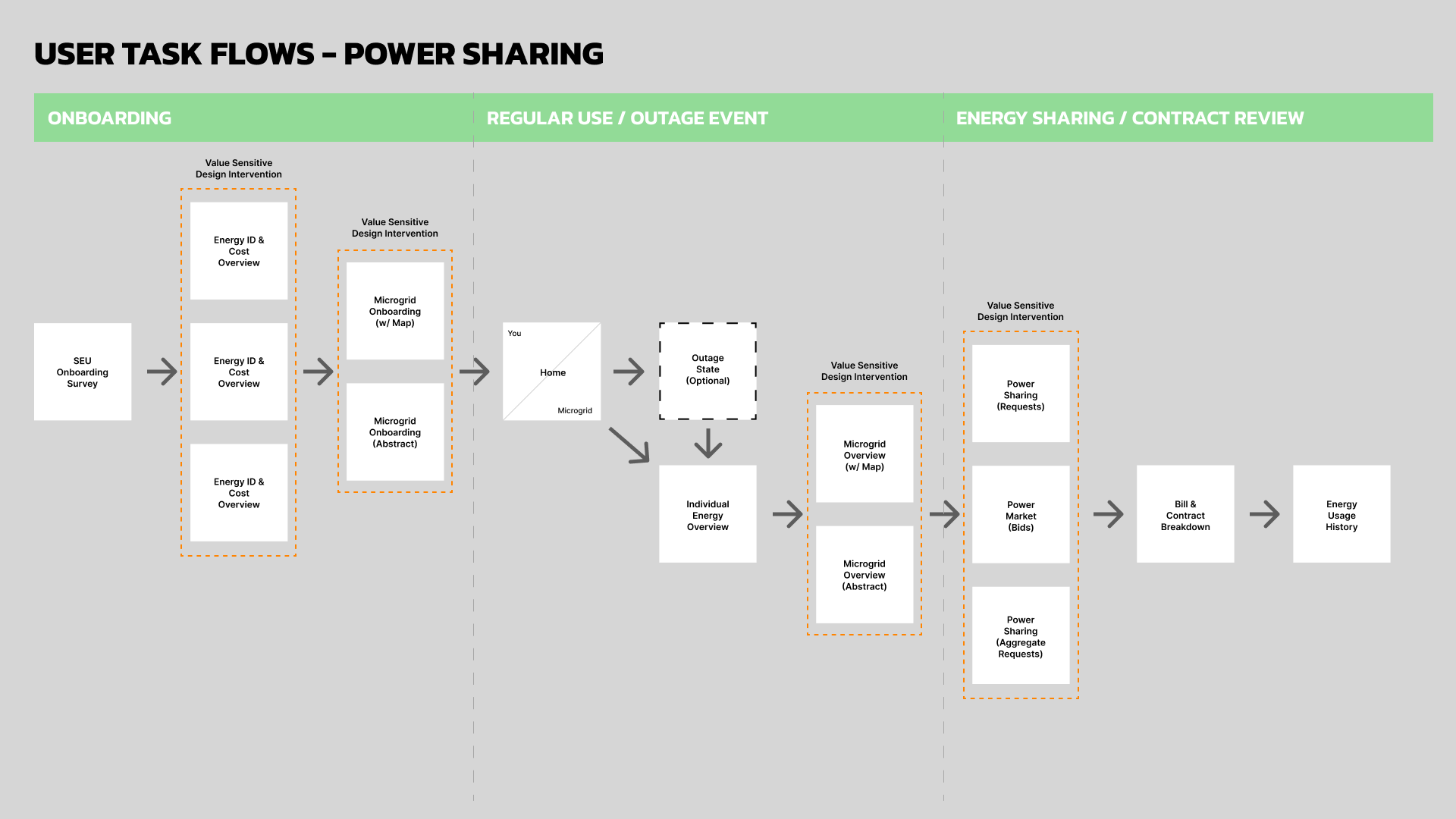
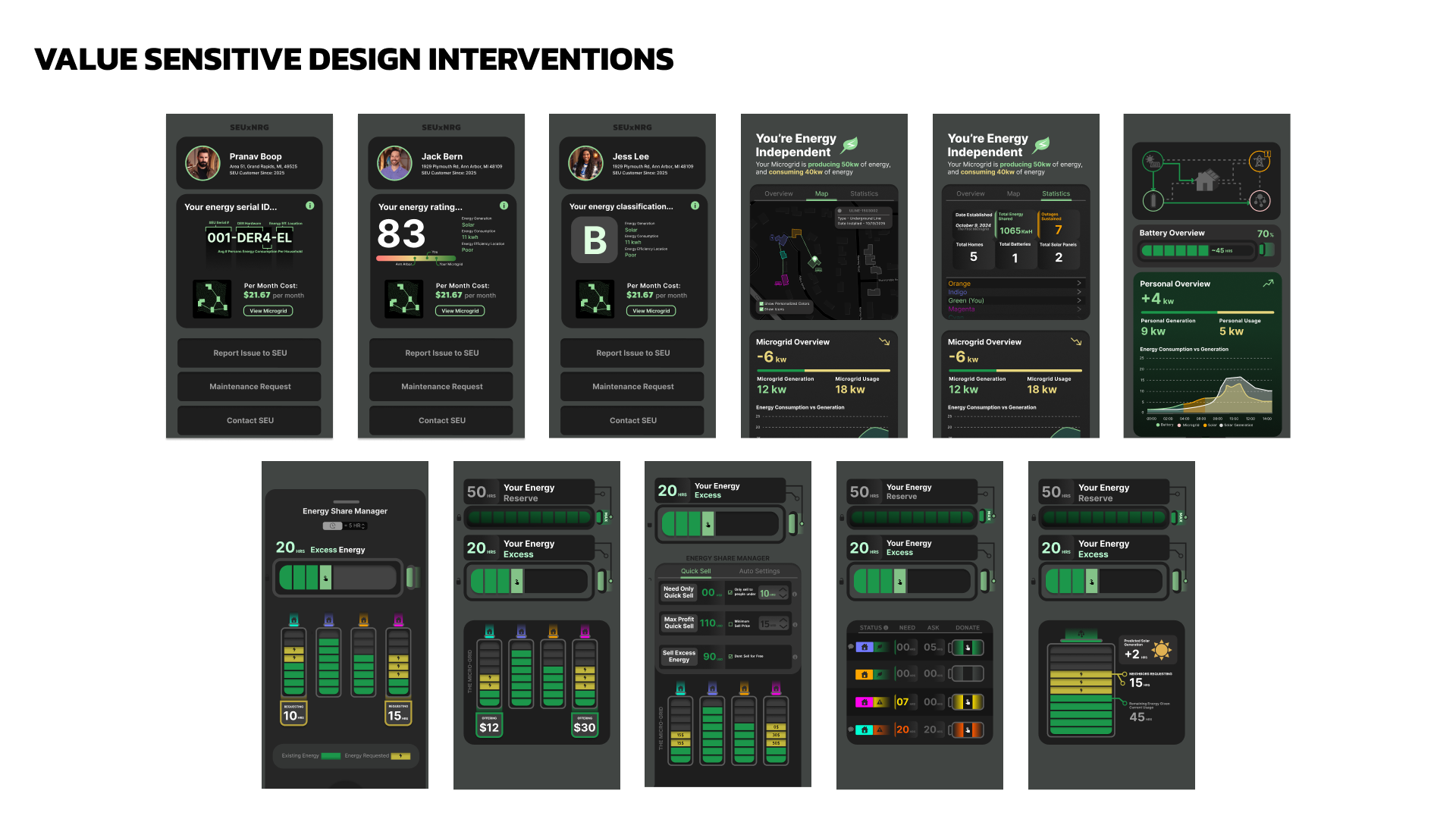
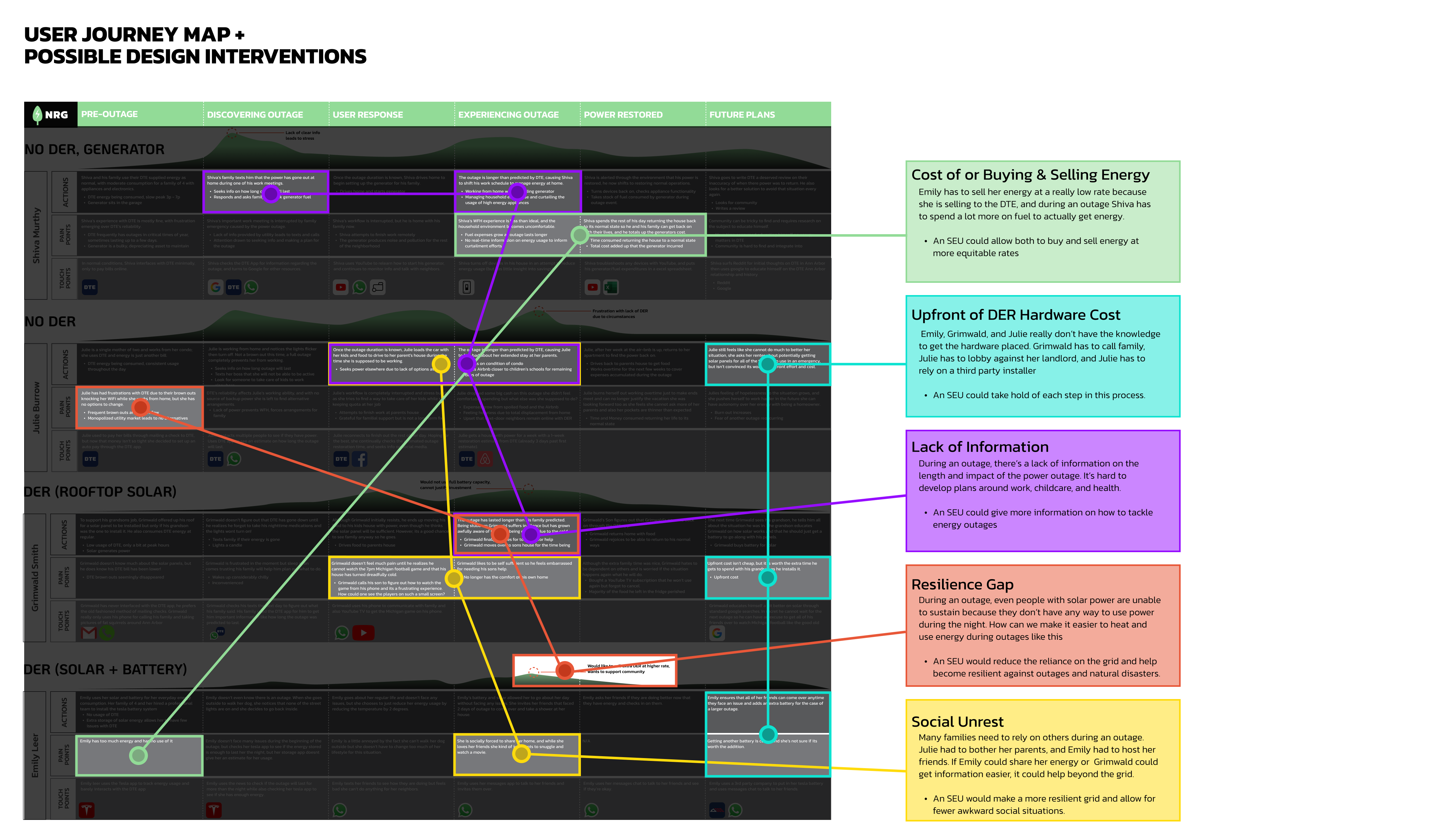
After concluding market and user research, we shifted to identifying where value tensions exist in the user task flows of sharing power with neighbors in a microgrid. Through visualizing the user task flows, we were able to identify where technological design interventions could offer solutions to friction in the process.
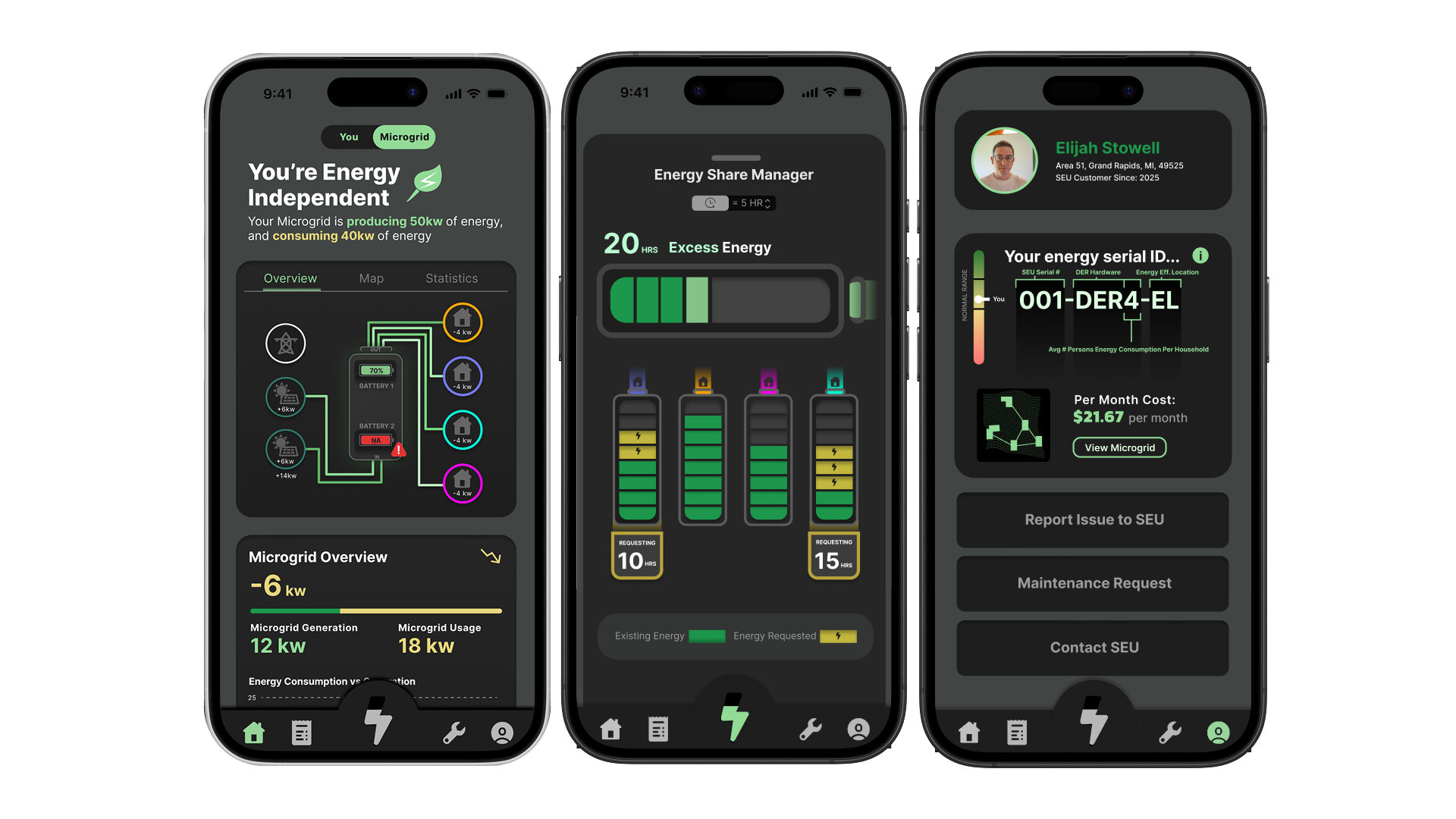
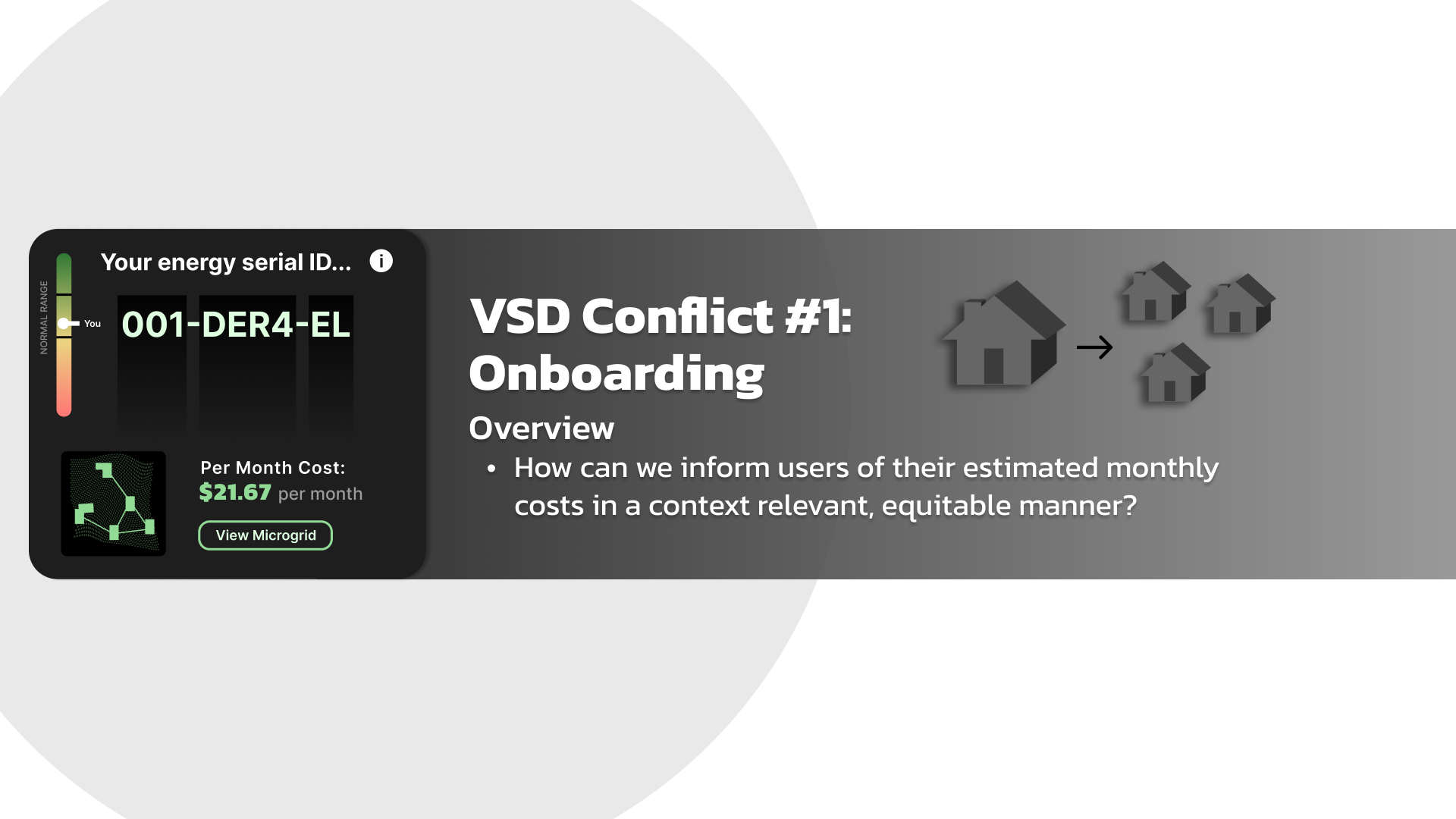
Microgrid Onboarding
How can we inform users of their estimated monthly costs in a context relevant, equitable manner?
Cost estimations are based on multiple complicated variables, including existing energy resources, number of people in a household, energy use, etc.
How do visual design choices impact how users think about participation in their microgrid?
Energy Overview
How can we inform microgrid participants of the current status of energy generation in their neighborhood?
Microgrid participants deserve to understand live usage and generation statistics in their aggregate, but individuals also deserve the right to privacy.
How can we balance these values through design?
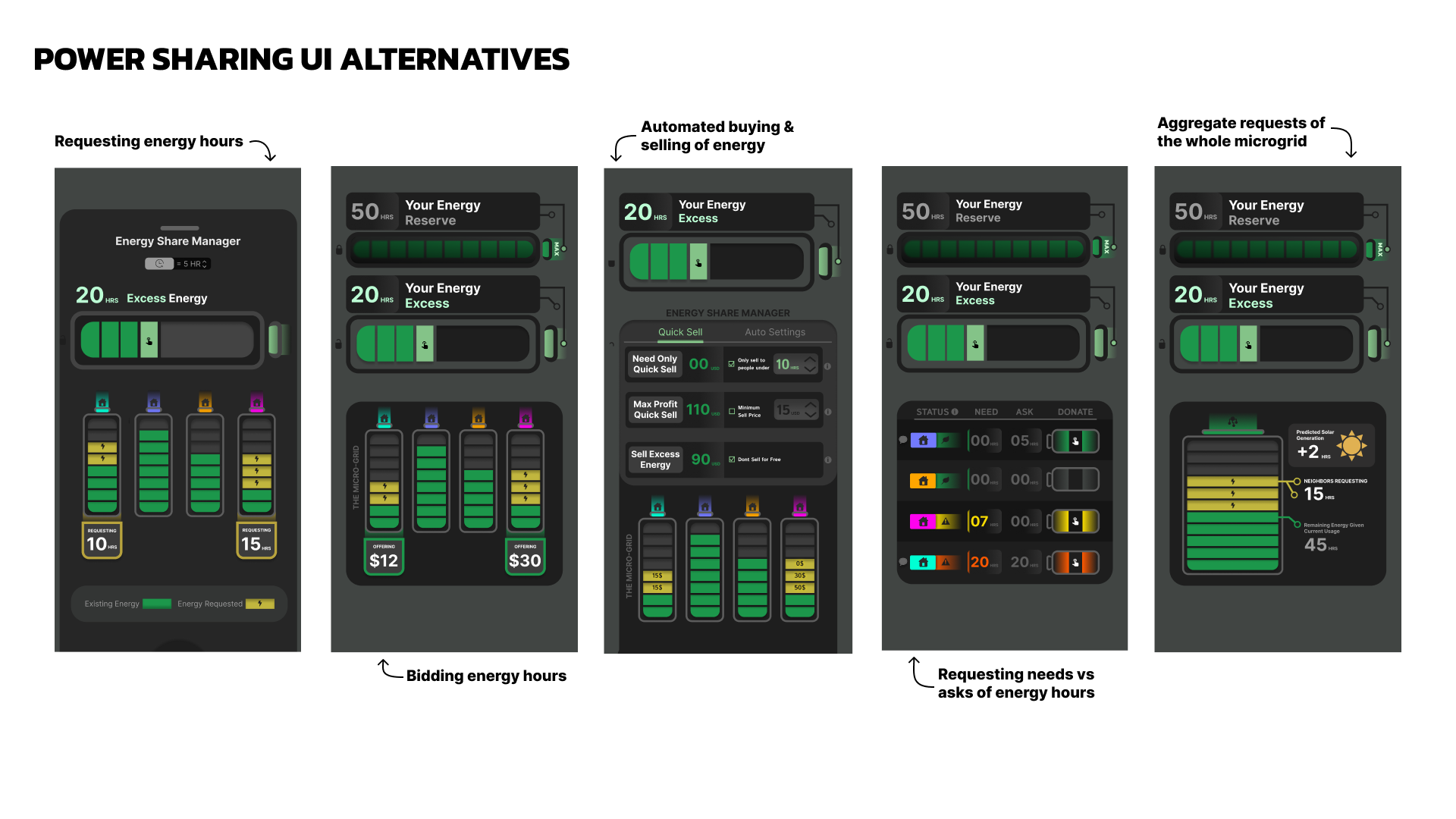
Energy Sharing Interface
How does the design of a power sharing interface affect the choices made by microgrid users?
How energy requests and donations are visually communicated to users will affect their decisions by dictating what they can/cannot, or what they should/should not do.
Ultimately, interaction design choices can impact overall social outcomes within and beyond microgrids.
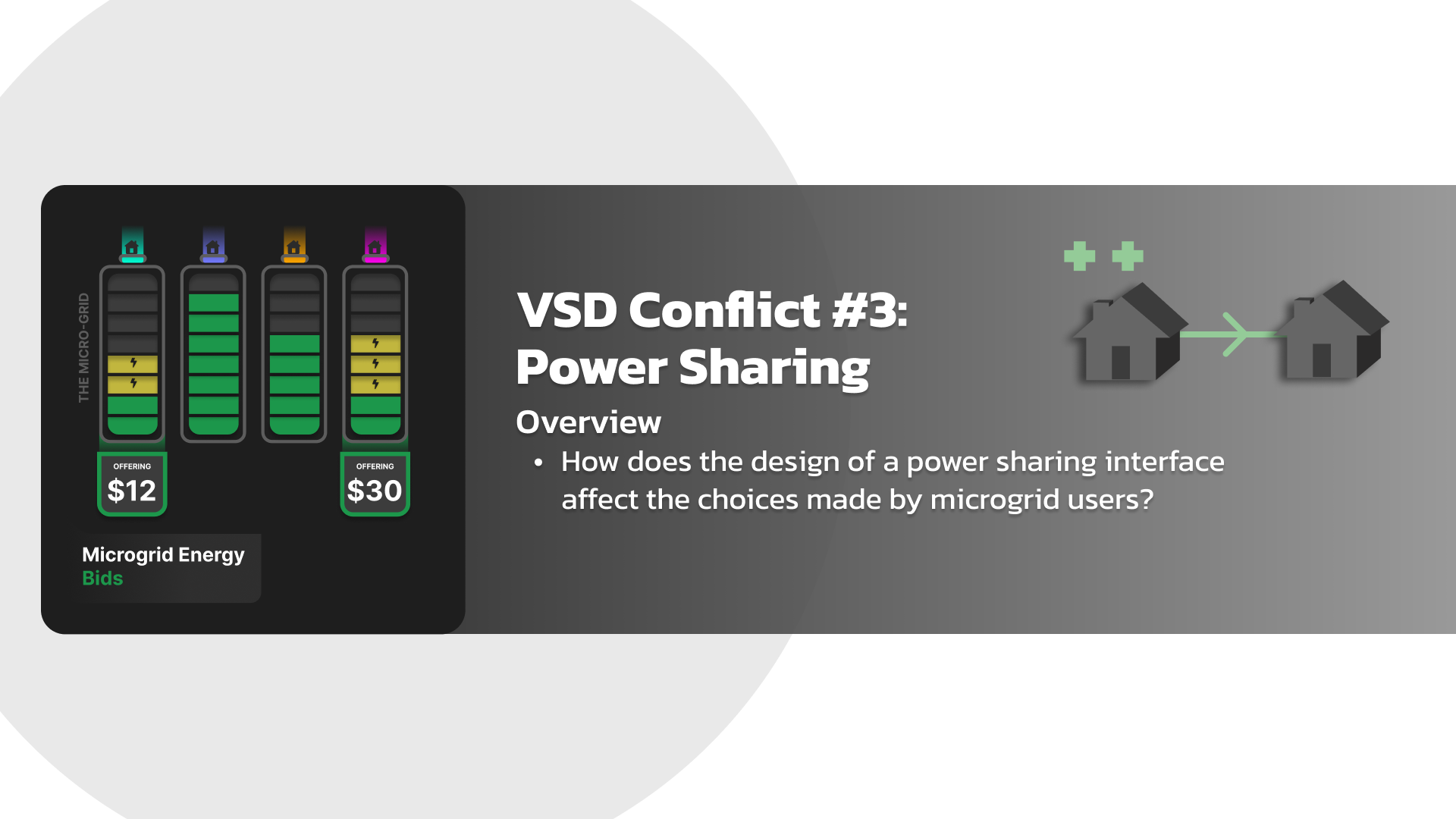
Energy Sharing Interface Prototypes
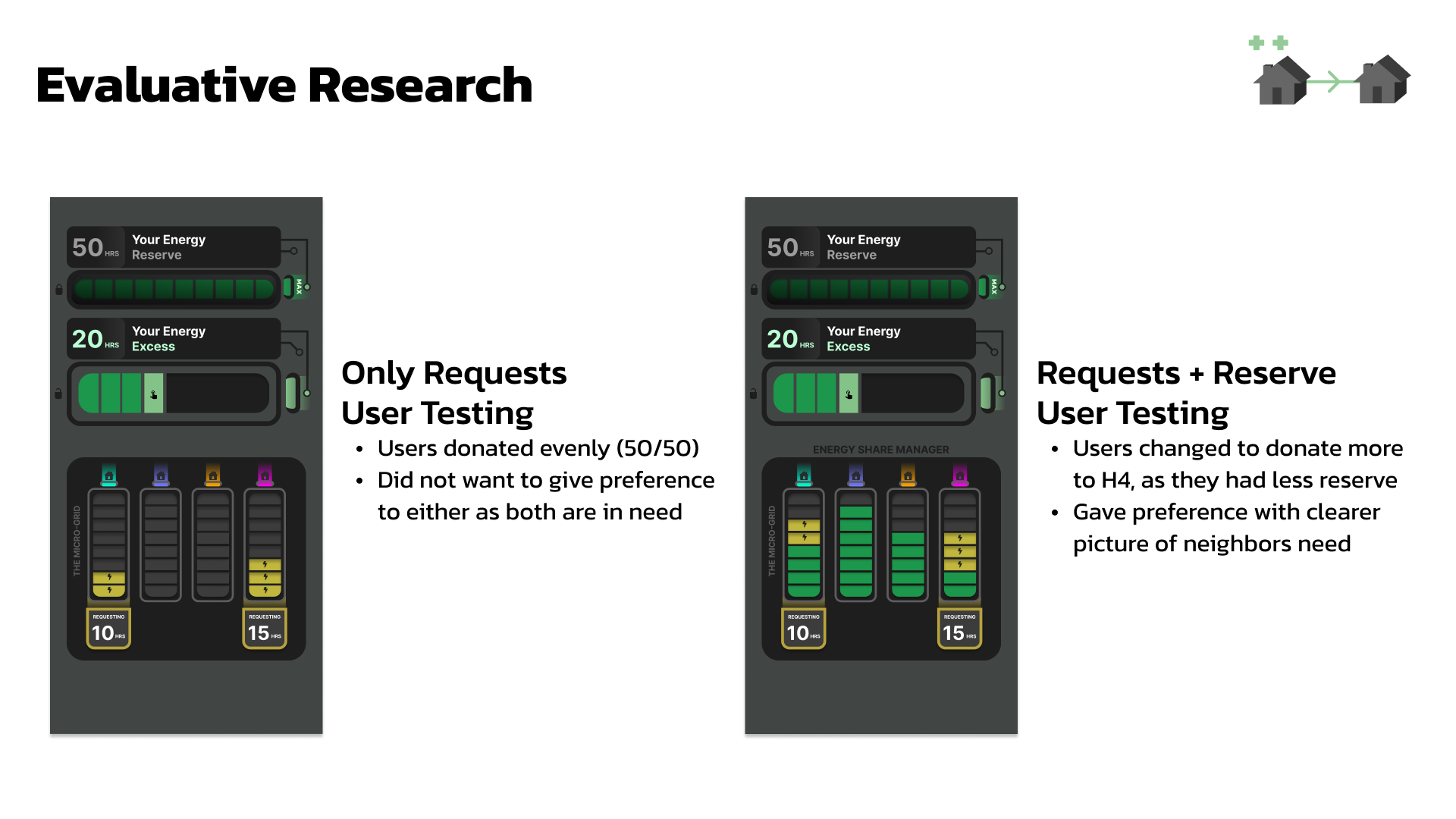
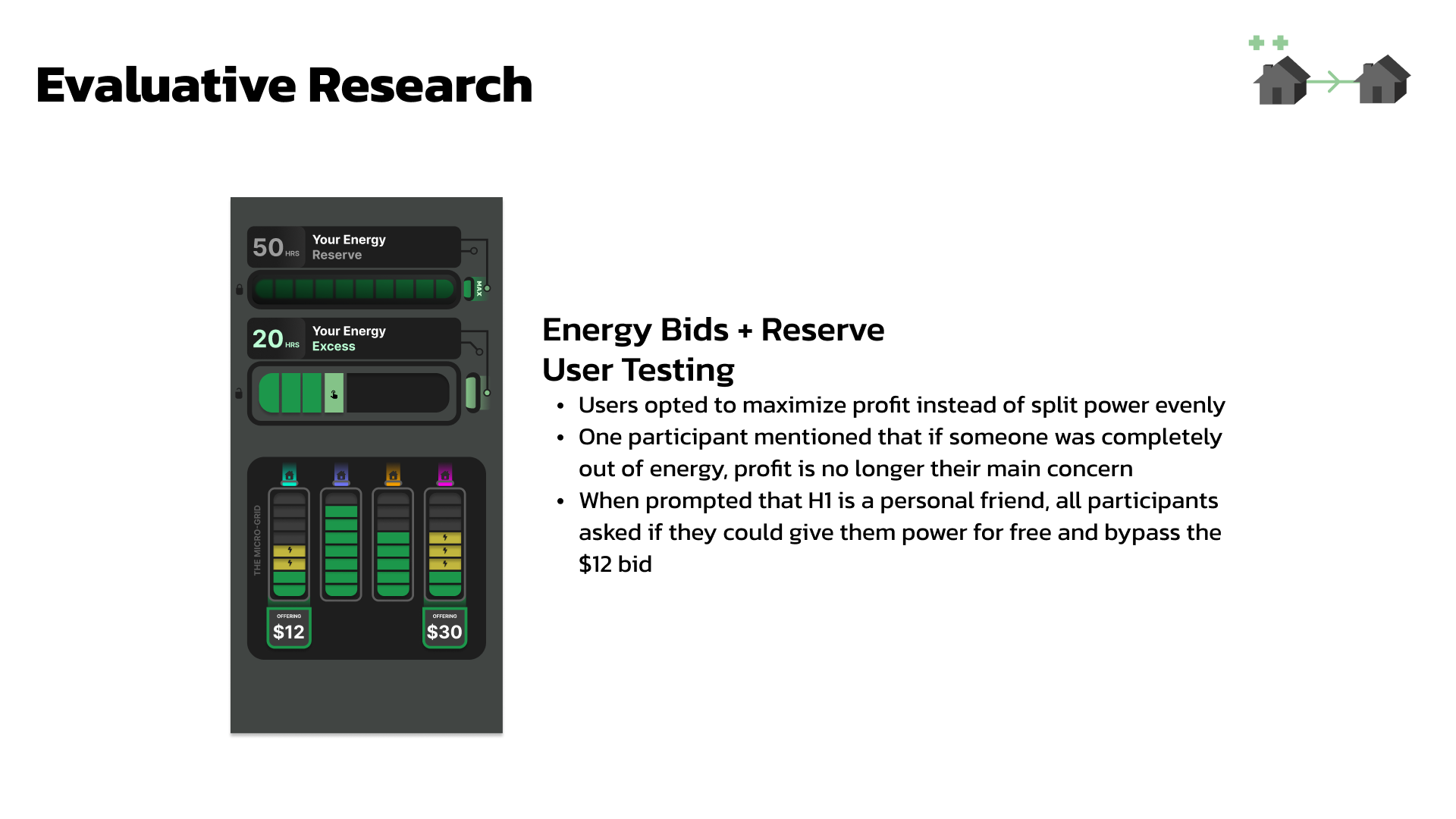
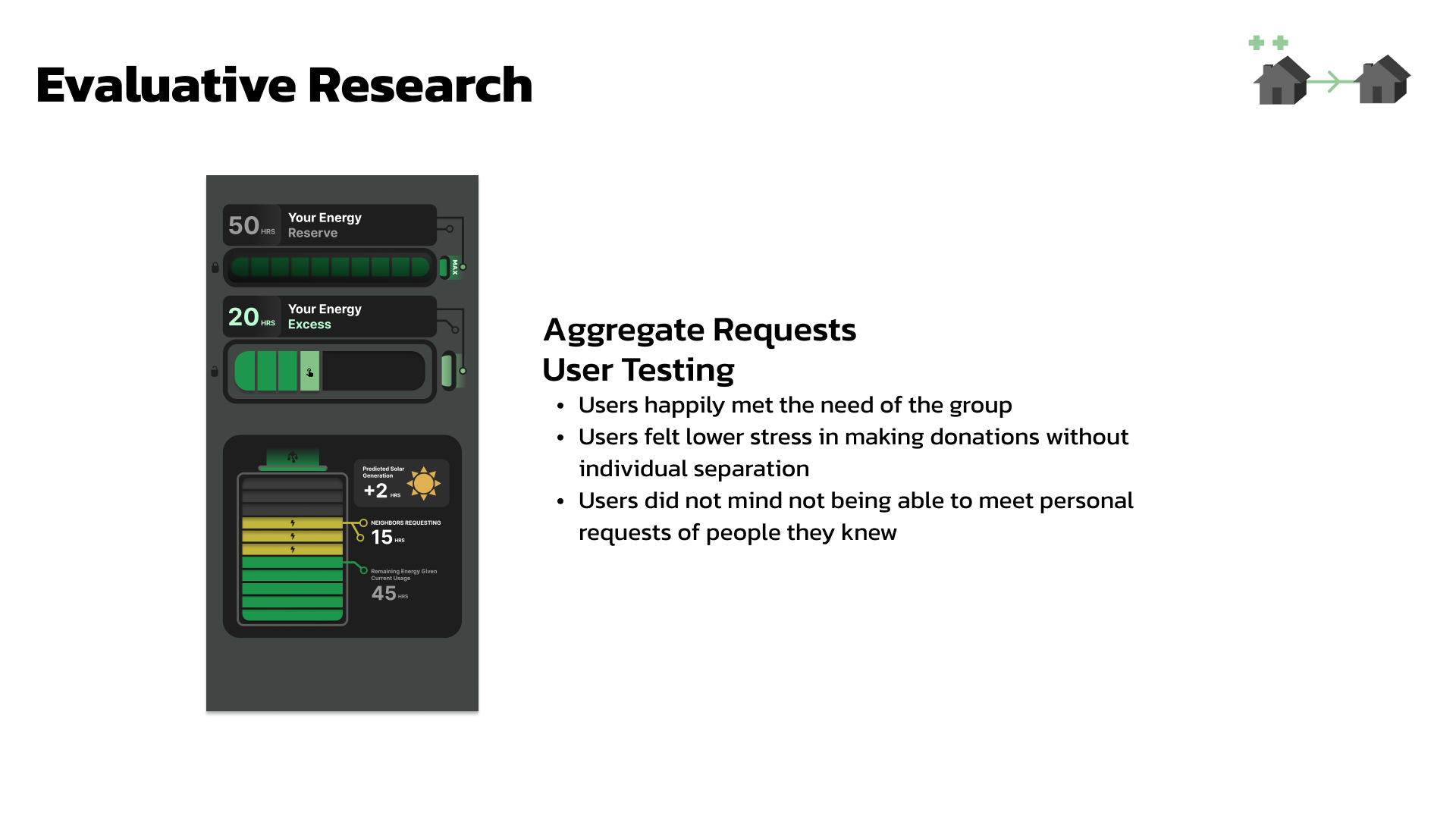
The bulk of our design and evaluative research came through the creation of multiple interface prototypes for users to share energy with their neighbors. We tested how different visual design choices impacted user behavior and overall social outcomes. For example, how does the choice to visualize other user's excess energy affect the perception of their need to those donating to them? Without other context like how many people are in the household, or what their average energy usage is, is it equitable to share such information?